
Launching January 2027
LED light therapy sessions start at Hair GP in January 2027. You can book your consultation now, and if LED is right for you, your doctor can add it to your plan when sessions begin.
Red light therapy is everywhere at the moment, from salon treatments to glowing helmets all over social media. It’s no surprise that so many of you ask us whether it could help your hair.
When we decided to bring light therapy into Hair GP, we wanted to do it properly. That meant a professional machine made for clinics, sessions run by our own clinical team, and a plan based on a proper diagnosis.
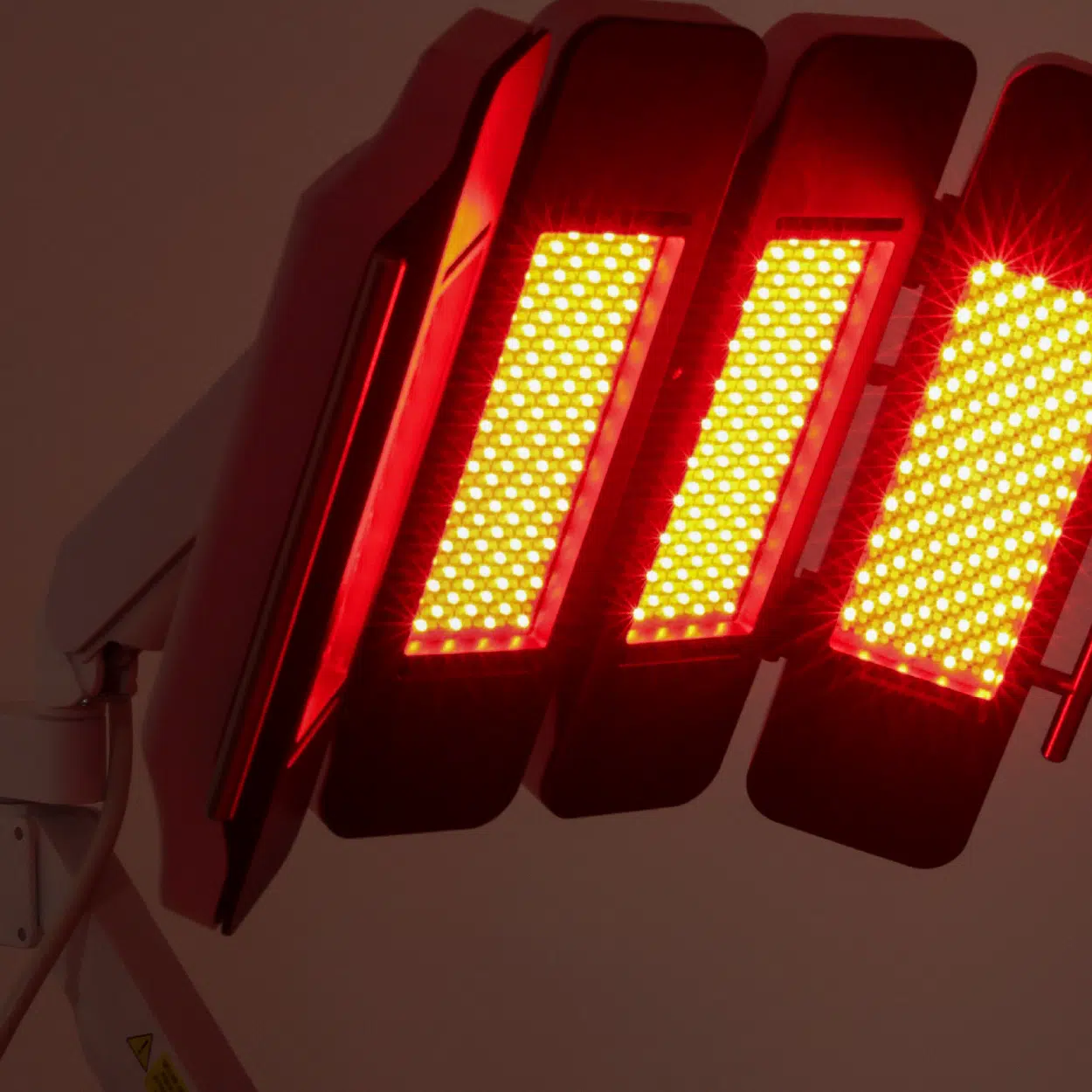
The machine we chose is the Dermalux Tri-Wave MD, a medical grade LED machine made in Britain. It’s certified for skin and pain treatments, not hair.1 So using it for your hair is our doctors’ clinical choice, and every session is set up for your scalp, as part of a plan from your doctor.
Here’s why we chose it, what the research on red light and hair shows, and who it may suit.
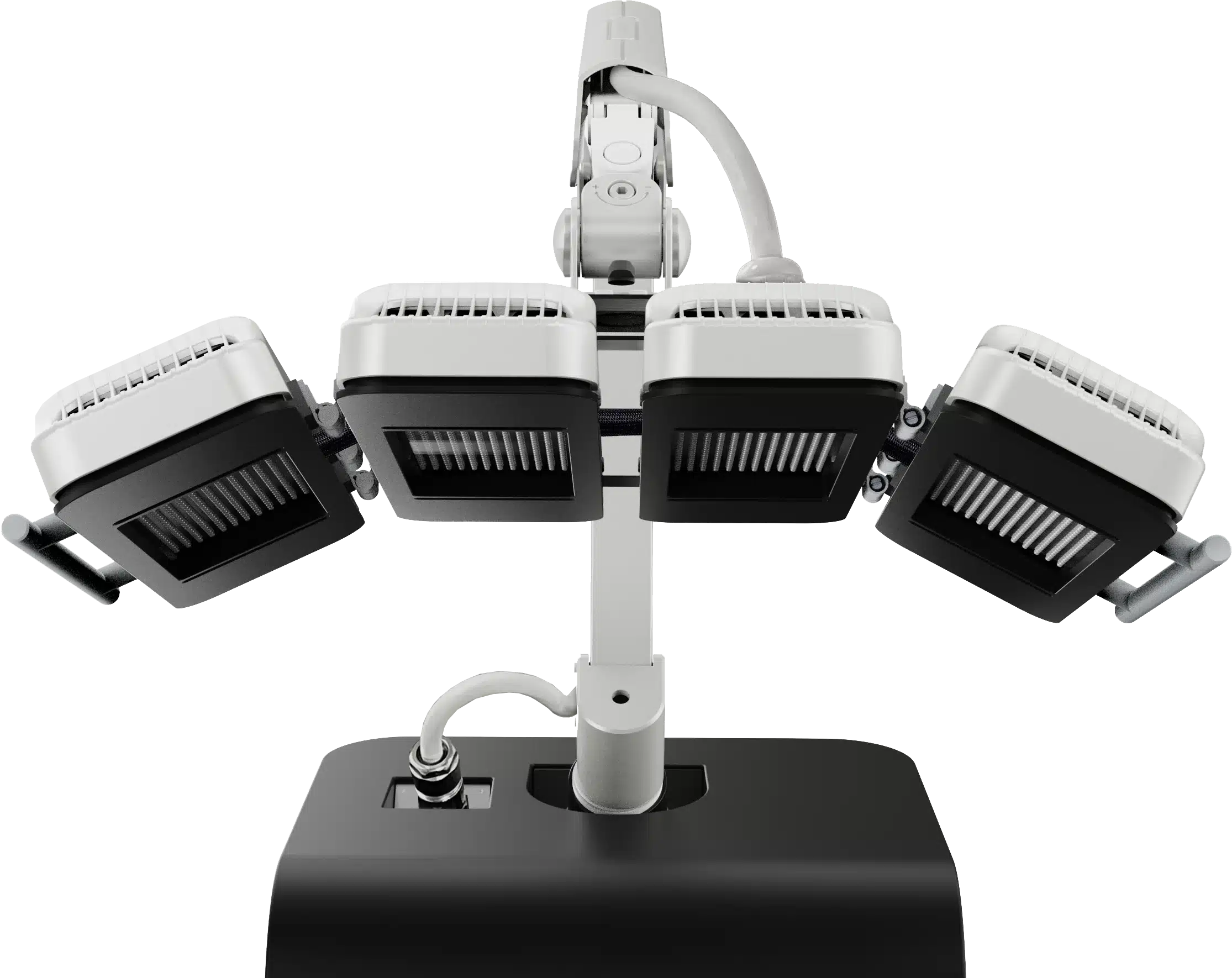
The Tri-Wave MD at a glance
Made in Britain
By Dermalux, for professional use only
3 wavelengths
Including red (633nm) and near infrared (830nm) light
4 panels
An adjustable head that sits just above your scalp, never touching it
10 minutes
Per session, with no needles
As featured in










Why we chose the Tri-Wave MD
There are plenty of LED devices around, from handheld wands to caps you wear at home. The Tri-Wave MD is a professional machine, made in Britain by Dermalux and sold for professional use only.1
Machines like this are a serious investment, and only a few London clinics use the Tri-Wave MD for hair. We made that investment because, if we offer light therapy at all, we want it done properly: a professional machine, our own clinical team and a plan from your doctor.

A set dose for each session.
The light, the time and the dose are set on the touchscreen, using set programmes or settings your doctor chooses.1
Steady light output.
A built in cooling system keeps the panels performing consistently through the session.1
A head that fits.
Four adjustable panels are angled over your scalp and held a little way off, so they never touch your skin.1
Comfortable by design.
You sit back in a treatment chair with protective goggles on, and relax.1
Made for skin too.
The Tri-Wave MD was designed for skin treatments as well, and your face sits under the light during a session.1 We set every session up for your hair, so any change in your skin is a bonus, not a promise.
What the research shows
Red light therapy is also called low level light therapy, or photobiomodulation. It uses red and near infrared light, not ultraviolet.1 Researchers think it may help the cells in hair follicles make more energy, though exactly how it works still isn’t known.2, 3
Here are two studies that included women with female pattern hair loss, the most common type of hair loss in women.4 Both compared real devices with dummy ones made to look the same, and in both, women using the real device gained more hairs in the area counted.2, 3
Study one, 2014
A red light helmet at home
42 women aged 26 to 60, 16 weeks
Women with mild to moderate female pattern hair loss wore a helmet fitted with red lasers and LEDs at home, for 25 minutes every other day. Hair was counted in a marked circle of scalp 1.9cm across, a little smaller than a 1p coin. Counts rose by an average of 100 hairs with the real helmet, compared with 24 with a dummy one. No side effects were reported.2
Study two, 2014
A laser comb at home
122 women and 103 men, 26 weeks
Four linked trials, two in women and two in men, tested a handheld laser comb used over the whole scalp three times a week. Hair was counted in a marked square of scalp. Women using the real comb gained an average of about 20 more full thickness hairs per square centimetre, compared with about 3 with a dummy comb. There were no serious side effects, though a few people had dry skin, itching, tenderness or warmth on the scalp.3
Good to know
Neither study used our machine. They tested home devices with red lasers (the helmet had LEDs as well), used 60 to 78 times over 16 to 26 weeks. Our machine uses LEDs rather than lasers, with its own mix of wavelengths and doses, in clinic sessions, so we can’t promise the same results.1, 2, 3
Hair loss isn’t one of the Tri-Wave MD‘s certified uses, and Dermalux’s safety information advises against using it outside them.1 We haven’t found a hair trial of the machine itself, so using it for hair is our doctors’ clinical choice, guided by the research above.
Hairs were counted in one small area of scalp, and a higher count isn’t always a change you can see.2, 3, 5 Results varied from person to person, and these studies couldn’t tell us the best dose or how long gains last.2, 3
The women studied had mild to moderate thinning and light to medium skin, and the companies that made the devices paid for both studies, fully or in part.2, 3
There’s no good evidence that light, or any other product, helps with telogen effluvium, the extra shedding that can follow illness, stress or having a baby.5, 6
So here’s our promise: your doctor will tell you honestly whether LED is worth adding for you. If it isn’t, we’ll say so.
Where LED fits in your plan
LED is never a replacement for finding and treating the cause of your hair loss. It’s one possible part of a bigger plan, and this is how that plan comes together.
01
Your consultation
50 minutes, one to one with a Hair GP doctor, including a scalp examination and trichoscopy, a close look at your scalp and hair through a special magnifier.
02
Tests and diagnosis
Blood tests where they’re needed, to find what’s driving your hair loss, such as low iron, a thyroid problem or hormone changes.
03
Your plan
Treatment matched to your diagnosis. Hair GP is doctor led, so your plan can include prescription options where they’re right for you, and treatments such as PRP or polynucleotides. If LED suits you, it’s part of the Hair GP protocol for these injectable treatments, and your doctor will time your sessions around them. We don’t yet know how much LED adds on top of them.
04
Reviewing progress
We check your progress with photographs, usually at four to six months, and change the plan if something isn’t working.
If your iron is low or your thyroid needs attention, that comes first. Light on its own would only be aimed at the wrong target. You can read more about what happens at your consultation.
Who LED may suit
It may be worth discussing if you
have mild to moderate female pattern thinning
would like a drug free option alongside your plan
would rather come in for sessions than use a device at home
can come in regularly and review progress with your doctor
LED isn't suitable if you
have epilepsy, or seizures set off by light
have lupus or another autoimmune condition
have porphyria, or another condition that makes you sensitive to light
take medicines or use creams that make you sensitive to light
have active cancer or are having cancer treatment
are pregnant or breastfeeding, because the risks aren’t known
Your doctor will check first if you
have an eye condition such as glaucoma or cataracts, or recent laser eye surgery
get headaches or migraines brought on by light
have had cancer in the past
have had an injectable treatment recently
have sunburn on your scalp
Dermalux recommends a consultation and a light sensitivity test before treatment.1 So before your first session, we’ll go through your health and everything you take, and do that test.
What a session is like
Sessions take place at our clinic at 29 Basuto Road, Parsons Green. You sit back in a comfortable treatment chair, and we position the panels over your scalp, held a little way off so they never touch your skin. Your face sits under the light too, so you keep protective goggles on throughout.1 Each session takes 10 minutes.
Please come with clean hair and scalp, free of creams, oils and styling products.1
Most people find it relaxing, sometimes with a gentle warmth, and there’s no expected downtime, so you can usually go straight back to your day.1 Afterwards you may notice some tingling, warmth or redness, which usually settles within an hour or two, and headaches are rare.1 Light sensitivity reactions are possible, so your doctor checks your health and medicines first.1 Darker patches of skin have been reported in some skin types, mostly with blue light or when the panels sit too close, so we keep them at the set distance.1 We’ll give you simple aftercare, such as sun protection on your face in daylight.1 There are no needles and no ultraviolet light.1
There’s no agreed number of sessions for hair yet.2 Your doctor will suggest how often to come and for how long, and we’ll review your progress with photographs, usually at four to six months.
Price and booking
LED light therapy sessions start in January 2027, as part of the Hair GP protocol for injectable treatments. Your first step is a consultation, so your doctor can confirm your diagnosis and whether LED belongs in your plan.
LED light therapy
Dermalux Tri-Wave MD sessions
Price confirmed before sessions start
Sessions from January 2027
10 minutes, no needles
Start with a 50 minute consultation with a Hair GP doctor, £300
Frequently asked questions
It may help some women with female pattern hair loss. In studies of home devices with red lasers, women used them several times a week for 16 to 26 weeks. They gained more hairs in a small marked area of scalp than women using dummy devices, though results varied from person to person. Our Dermalux Tri-Wave MD uses LEDs rather than lasers, hair loss isn’t one of its certified uses, and we haven’t found a hair trial of the machine itself. So using it for hair is our doctors’ clinical choice, and your doctor will tell you honestly whether it’s worth adding to your plan.
In the two hair studies, which used different devices from ours, side effects were few and mild, such as dry skin or itching. After a session you may notice some tingling, warmth or redness, which usually settles within an hour or two. Headaches are rare, and light sensitivity reactions and darker patches of skin have been reported. It isn’t suitable for everyone, for example with epilepsy, lupus or another autoimmune condition, medicines that make you sensitive to light, or pregnancy or breastfeeding. Your doctor will go through your health with you before your first session.
It shouldn’t. Most people find it comfortable and relaxing, though you may feel a gentle warmth.
Honestly, nobody knows the ideal number for hair yet. The studies used home devices every other day or three times a week, and the research hasn’t settled the best dose. Your doctor will suggest a plan based on your diagnosis, and we’ll review your progress with photographs, usually at four to six months. If LED isn’t helping, we’ll say so.
Yes, if it’s right for you. LED is part of the Hair GP protocol for injectable treatments, such as PRP or polynucleotides, and your doctor will time your sessions around them. Some medicines and creams make your skin more sensitive to light, so your doctor will check those first too. The larger study left out people using hair medicines, so we can’t say how much LED adds to other treatment.
No. The Tri-Wave MD is a professional machine for clinics, and our team sets up each session. To be fair to home devices, the hair studies were done with devices used at home, not with clinic machines like ours. If you’re weighing up a home device instead, we’re happy to talk it through at your consultation.
We can’t promise it will. The Tri-Wave MD was designed for skin treatments as well, and your face sits under the light during a session. We set every session up for your scalp and hair, though, and don’t offer it as a skin treatment, so think of any change in your skin as a bonus.
There’s no good evidence that light, or any other product, helps with telogen effluvium, the extra shedding that can follow illness, stress or having a baby. It usually settles by itself, so finding any cause, such as low iron, comes first.
Yes. Most of our patients are women, and men are very welcome too. The laser comb study included 103 men as well as 122 women, and the real comb did better than the dummy one in men too.
LED sessions start at Hair GP in January 2027. You can book your consultation now, so your plan is ready when sessions begin.
No. The Tri-Wave MD doesn’t give out ultraviolet light, so it won’t tan your skin. Darker patches of skin have been reported with LED in some skin types, mostly with blue light or when the panels sit too close. That’s why we keep them at the set distance.
References
- Dermalux. Tri-Wave MD product information, and LED phototherapy common questions (including its safety and performance information). Accessed 20 November 2026. dermaluxledpro.com/tri-wave-md and dermaluxledpro.com/led-phototherapy-common-questions
- Lanzafame RJ, Blanche RR, Chiacchierini RP, Kazmirek ER, Sklar JA. The growth of human scalp hair in females using visible red light laser and LED sources. Lasers in Surgery and Medicine. 2014;46(8). pmc.ncbi.nlm.nih.gov/articles/PMC4265291
- Jimenez JJ, Wikramanayake TC, Bergfeld W, et al. Efficacy and safety of a low-level laser device in the treatment of male and female pattern hair loss: a multicenter, randomized, sham device-controlled, double-blind study. American Journal of Clinical Dermatology. 2014;15(2). pmc.ncbi.nlm.nih.gov/articles/PMC3986893
- British Association of Dermatologists. Female pattern hair loss. Patient information leaflet, updated October 2024. skinhealthinfo.org.uk/condition/female-pattern-hair-loss
- Committee of Advertising Practice. Hair: hair loss. Advice online, 5 October 2026. asa.org.uk/advice-online/hair-hair-loss.html
- British Association of Dermatologists. Telogen effluvium. Patient information leaflet, updated October 2025. skinhealthinfo.org.uk/condition/telogen-effluvium
