

Introduction
If you’re reading this, you’ve likely spent countless hours researching hair loss treatments, only to find your bathroom cabinet filled with expensive products that promised results but delivered disappointment. You’re not alone. Research shows that over 75% of women experiencing hair thinning report dissatisfaction with off-the-shelf solutions, whilst nearly 40% of women with androgenetic alopecia abandon treatment within the first year due to ineffectiveness.
The harsh truth? Most hair loss products weren’t designed with female hair loss in mind. They’re simply men’s formulations repackaged in pink bottles, ignoring the fundamental differences in how women’s hair growth cycle responds to treatment. From medications that can cause birth defects to topical solutions that trigger unwanted facial hair, the one-size-fits-all approach fails to address the unique hormonal, nutritional, and physiological factors driving female hair thinning.
This article exposes why generic products fail, reveals the marketing tactics that exploit vulnerable women, and explains the critical differences between male and female pattern hair loss. More importantly, we’ll show you what actually works—and why specialised treatment approaches succeed where shelf products consistently fail.
Key Takeaways – TL/DR
- 90% of over-the-counter hair products are formulated for male pattern baldness, not female hair thinning patterns
- Female hair loss has different root causes requiring targeted treatments, not generic minoxidil solutions
- Products marketed to women often contain the same ineffective ingredients as male products with female packaging
- Hormonal and nutritional factors in female hair loss are rarely addressed by shelf products
Understanding Female Hair Thinning vs Male Pattern Baldness
Whilst both men and women experience androgenetic alopecia, the underlying mechanisms and presentation patterns differ significantly, making gender-specific approaches essential for effective treatment. Understanding these fundamental differences explains why treatments designed to treat male pattern baldness often fail in women, leading to frustration and continued hair loss despite considerable investment in unsuitable therapies.
Why Male Sex Hormones Affect Hair Differently in Women
The relationship between androgens and human hair follicles varies dramatically between sexes, despite both experiencing DHT-related follicle miniaturisation. In women, circulating androgen levels are typically 10-20 times lower than in men, yet female hair follicles demonstrate heightened sensitivity to these hormones [1]. This increased sensitivity means that even normal androgen levels can trigger female pattern hair loss, particularly during hormonal transitions like menopause when protective oestrogen levels decline.
The conversion of testosterone to DHT occurs differently in female scalp tissue. Women possess lower levels of 5-alpha reductase type II in frontal hair follicles compared to men, but higher levels of aromatase, which converts androgens to oestrogens [2]. This enzymatic difference explains why women typically retain their frontal hairline whilst experiencing diffuse thinning across the crown—a stark contrast to the characteristic receding hairline and vertex balding seen in male pattern baldness.
Additionally, the hair growth cycle responds uniquely to hormonal influences in women. Female follicles spend longer in the telogen (resting) phase when exposed to androgens, resulting in gradual overall thinning rather than complete baldness. This pattern makes early detection challenging but also means that appropriate intervention can often restore follicle function more successfully than in advanced male pattern baldness, where follicles may be permanently miniaturised.

Hair Loss Medications: Why What Works for Men Taking Them Fails Women
The most effective hair loss medications for men often prove ineffective or even dangerous for women, creating a frustrating treatment gap that leaves female patients with limited options. Understanding why these male-focused treatments fail women is crucial for anyone considering prescription solutions for hair thinning.
The Finasteride Problem for Women
Oral finasteride, one of the two drugs most commonly prescribed for male pattern baldness, presents significant risks for women of childbearing age. The FDA classifies finasteride as pregnancy category X, meaning it can cause severe birth defects, particularly genital abnormalities in male foetuses [3]. Even handling crushed tablets poses risks to pregnant women, making this prescription medication unsuitable for premenopausal women.
Beyond pregnancy concerns, finasteride’s efficacy in women remains questionable. Whilst men taking 1mg daily often see substantial improvements, clinical trials in postmenopausal women showed no significant benefit compared to placebo [4]. However the 5mg dose, although used off licence has shown good results for post-menopausal women.
Dutasteride, another 5-alpha reductase inhibitor, poses similar challenges. Though more potent than finasteride, it carries comparable pregnancy risks and lacks robust evidence supporting its use in female pattern hair loss. These hair loss medications highlight a critical gap in treatment development, where solutions effective for male androgenetic alopecia cannot simply be repurposed at the same dose for women’s unique physiological needs.
Topical Minoxidil: The One-Size-Fits-All Hair Growth Myth
While topical minoxidil remains the only over-the-counter treatment clinically proven for hair growth, its effectiveness in women falls far short of marketing promises. The reality is that this one-size-fits-all approach, originally developed for men, often disappoints female users who experience limited new hair growth despite months of consistent application. Also for women due to side effects of hirsuitism they can only use it once a day not twice a day.
Why Standard Concentrations Don’t Match Female Needs
The fundamental problem with topical minoxidil lies in its standardised formulations. Women are typically offered 2% solutions, whilst men receive 5% concentrations—a distinction based on outdated clinical trials rather than optimal treatment outcomes. Research shows many women actually require the higher concentration to stimulate meaningful hair growth, yet the 5% formula often triggers scalp irritation, facial hair growth, and aesthetic concerns that make daily application challenging. By using once a day many of these side effects can be reduced/avoided.
The foam versions, whilst reducing scalp irritation, create their own problems. Applied directly to thinning areas, the foam disrupts styling and leaves residue that many women find unacceptable for daytime use. More critically, minoxidil alone fails to address the hormonal components driving female hair loss. Without improving blood flow through complementary treatments or combining with DHT-blocking alternatives, women achieve only partial results. This incomplete approach explains why 40% discontinue treatment within six months, frustrated by minimal improvement despite the demanding daily routine.

Side Effects Women Experience vs Marketing Promises
Marketing materials for over-the-counter hair loss treatments often promise dramatic results with minimal side effects, yet clinical evidence reveals a starkly different reality for women. Studies show that up to 44% of women using topical minoxidil experience adverse effects beyond what product packaging typically discloses [5].
The Unwanted Hair Growth Paradox
The most distressing side effect women face is paradoxical facial hair growth, occurring in approximately 15-20% of users due to systemic absorption through scalp vasculature [6]. This hypertrichosis develops because minoxidil doesn’t discriminate between scalp and facial follicles—when absorbed systemically, it stimulates hair growth wherever androgen-sensitive follicles exist. Women’s heightened hormonal sensitivity makes them particularly susceptible to this unwanted hair growth, especially on the upper lip and cheeks.
Other side effects frequently unreported include persistent headaches, dizziness upon standing, and scalp irritation that can worsen existing inflammation. Initial shedding, whilst technically expected, often catches women unprepared when marketing emphasises only regrowth. Managing these possible side effects requires careful monitoring and sometimes alternative treatments. Healthcare providers increasingly recommend starting with lower concentrations or exploring hormone-modulating therapies before committing to long-term minoxidil use, acknowledging that marketing promises rarely align with individual experiences.
Risk Factors Unique to Female Hair Loss Products Ignore
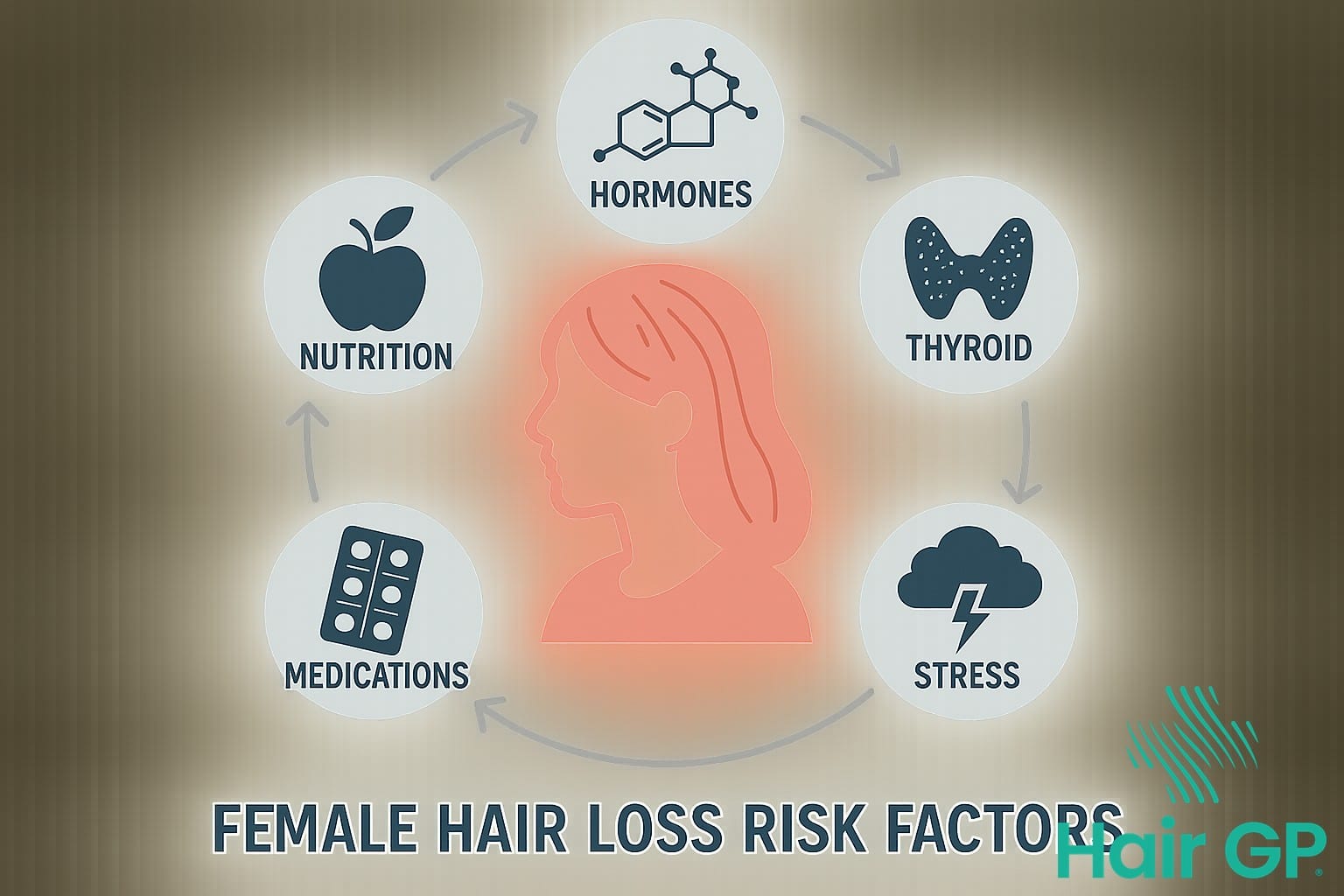
Female hair loss involves complex risk factors that shelf products consistently overlook. Unlike men, women experience cyclical hormonal fluctuations throughout their lives—menstruation, pregnancy, menopause—each potentially triggering telogen effluvium or accelerating androgenetic alopecia. These hormonal shifts require comprehensive hormonal testing to identify specific imbalances, yet generic treatments assume a one-size-fits-all approach.
Thyroid dysfunction affects women five to eight times more frequently than men, with both hypothyroidism and hyperthyroidism directly impacting hair growth cycles. Similarly, nutritional deficiencies—particularly iron, vitamin D, and B12—disproportionately affect women due to menstruation, restrictive dieting, and pregnancy demands. Standard nutritional assessment reveals these deficiencies in up to 40% of women experiencing hair loss, yet mass-market products cannot address individual nutrient gaps.
Stress-related factors uniquely manifest in women through conditions like polycystic ovary syndrome (PCOS) and autoimmune disorders. Medical conditions including diabetes further complicate treatment, as insulin resistance affects both hormone production and hair follicle metabolism. Generic products cannot account for these systemic issues, leaving underlying causes unaddressed whilst promising superficial results through topical applications alone.
Hair Loss Related Marketing Tactics That Exploit Women
The beauty industry has perfected the art of exploiting women’s hair loss anxieties through calculated marketing strategies. Companies routinely take products originally marketed to men, add pink packaging and floral scents, then charge 30-40% more for essentially identical formulations. This ‘pink tax’ on hair loss related treatments means women often pay premium prices for products that offer no additional benefits over their male-targeted counterparts.
Perhaps more troubling are the manipulative before-and-after photos that flood social media and product review pages. These images frequently feature different lighting, angles, or even different people, creating unrealistic expectations for desperate consumers. Marketing teams specifically target emotionally vulnerable moments, using phrases like ‘reclaim your femininity’ and ‘don’t let hair loss define you’ to trigger impulse purchases. When choosing treatments, it’s essential to look beyond emotional appeals and evaluate claims based on clinical evidence rather than carefully curated testimonials. Understanding these tactics helps protect both your wallet and wellbeing from predatory marketing practices.
Clinical Trials: Why Female Hair Loss Research Lags Behind
Clinical trials for hair loss treatments predominantly recruit male participants, creating a significant research gap for female-specific therapies. Researchers historically excluded women from early-phase studies due to hormonal variability concerns, leaving female pattern hair loss understudied despite affecting millions. Most FDA-approved treatments underwent testing primarily on men, with women receiving adapted protocols rather than targeted research. University studies continue this pattern, with female participants often representing minimal percentages in pivotal trials. This gender disparity means women rely on extrapolated data from male-focused research, lacking evidence-based treatments addressing their unique hormonal influences, diffuse thinning patterns, and physiological responses to medications.
Conclusion
Women experiencing hair thinning deserve more than generic solutions originally designed for male pattern baldness. The complexity of female hair loss requires sophisticated approaches that address hormonal fluctuations, nutritional deficiencies, and autoimmune factors unique to women’s physiology. Rather than investing in one-size-fits-all hair loss treatments that often disappoint, consider the value of personalised treatment protocols developed specifically for your individual needs.
Specialised care begins with comprehensive diagnostics, including trichoscopy analysis and hormonal assessments, to identify the precise mechanisms driving your hair loss. Specialist Hair Doctors can create targeted interventions that address root causes whilst minimising unwanted side effects commonly associated with generic products.
Stop wasting time and money on treatments that weren’t designed with you in mind. Schedule a consultation with a hair restoration specialist who understands the unique challenges of female pattern hair loss. Your journey to healthier, fuller hair starts with expertise tailored to women’s specific biological needs and treatment goals.
Frequently Asked Questions
While some products like minoxidil can be used by both genders, many male hair loss treatments are dangerous for women, especially finasteride which can cause birth defects. Women need different formulations and concentrations. Its essential you discuss with a Hair Specialist Doctor to check these are safe for you before starting.
Common side effects include unwanted facial hair growth, scalp irritation, initial increased shedding, dizziness, and headaches. Many women also experience allergic reactions to propylene glycol in liquid formulations.
Response to minoxidil varies based on the underlying cause of hair loss, genetic factors affecting drug metabolism, proper application technique, and whether hormonal or nutritional issues are also addressed.
If you see no improvement after 3-4 months of consistent use, consult a specialist. However, seek immediate help if experiencing rapid hair loss, scalp pain, or signs of underlying medical conditions.
References
- Herskovitz I, Tosti A. Female pattern hair loss. Int J Endocrinol Metab. 2013. PMID: 24719635
- Fabbrocini G, Cantelli M, Masarà A, Annunziata MC, Marasca C, Cacciapuoti S. Female pattern hair loss: A clinical, pathophysiologic, and therapeutic review. Int J Womens Dermatol. 2018. PMID: 30627618
- Kaufman KD, Olsen EA, Whiting D, Savin R, DeVillez R, Bergfeld W et al.. Finasteride in the treatment of men with androgenetic alopecia. Finasteride Male Pattern Hair Loss Study Group. J Am Acad Dermatol. 1998. PMID: 9777765
- Price VH, Roberts JL, Hordinsky M, Olsen EA, Savin R, Bergfeld W et al.. Lack of efficacy of finasteride in postmenopausal women with androgenetic alopecia. J Am Acad Dermatol. 2000. PMID: 11050579
- Gupta AK, Talukder M, Venkataraman M, Bamimore MA. Minoxidil: a comprehensive review. J Dermatolog Treat. 2022. PMID: 34159872
- Randolph M, Tosti A. Oral minoxidil treatment for hair loss: A review of efficacy and safety. J Am Acad Dermatol. 2021. PMID: 32622136