

Introduction
One in three UK women experience hair loss: what actually works is a question countless women find themselves desperately searching for answers to. This statistic isn’t just a number—it represents millions of women across the UK silently struggling with thinning hair, unexpected hair shedding, and the emotional toll that accompanies these changes. If you’re reading this, you’re likely among the affected individuals seeking genuine, evidence-based solutions rather than empty promises.
Female hair loss manifests differently than the receding hairlines commonly associated with men. Women typically experience diffuse thinning across the scalp, making it particularly challenging to recognise and address early. Whether you’ve noticed increased hair shedding in your brush, a widening parting, or overall loss of volume, understanding the underlying causes is crucial for finding effective treatment.
This comprehensive guide explores the science behind hair loss in women, from hormonal influences and genetic factors to autoimmune conditions and lifestyle triggers. We’ll examine proven medical treatments, discuss when surgical options become appropriate, and reveal evidence-based growth stimulation methods. Additionally, we’ll provide practical styling strategies and support resources specifically for UK women navigating this journey. Most importantly, we’ll separate fact from fiction, focusing exclusively on what research shows actually works.
Key Takeaways – TL/DR
- 33% of UK women experience significant hair loss, with female pattern hair loss being the most common cause affecting 40% of women by age 50
- Topical minoxidil shows 60-70% effectiveness in stopping hair loss and 30-40% in promoting regrowth when used consistently for 6 months
- Low dose oral minoxidil (0.25-5mg daily) offers superior results to topical formulations with fewer application challenges
- Early intervention is crucial – treatments work best when started at first signs of thinning rather than after significant loss
Understanding Female Pattern Hair Loss: The Most Common Culprit
Female pattern hair loss (FPHL), also known as androgenic alopecia, accounts for the vast majority of hair thinning cases in women[1]. Unlike sudden hair shedding that might follow stress or illness, pattern hair loss FPHL develops through gradual thinning over months and years, affecting hair density across the crown and top of the scalp whilst typically preserving the frontal hairline.
How Female Pattern Baldness Differs from Male Pattern Hair Loss
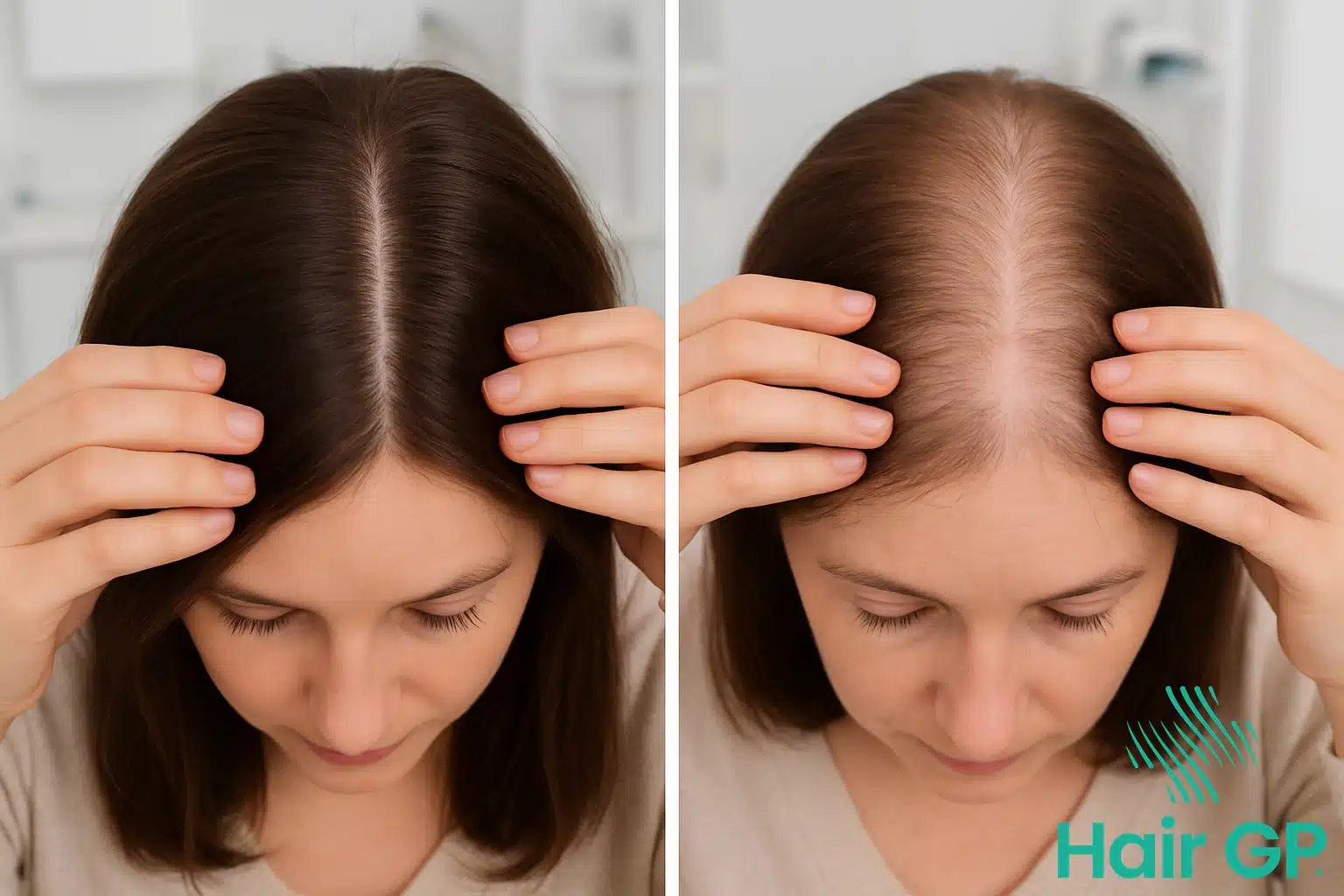
The presentation of female pattern hair loss differs markedly from its male counterpart, making recognition crucial for proper treatment. Women experience diffuse thinning across the crown and top of the scalp, creating a noticeable widening of the central part line[2]. This contrasts sharply with male pattern hair loss, where distinct patches of baldness and a receding hairline are hallmark features. The hair follicles in affected areas don’t disappear entirely but undergo miniaturisation, producing progressively finer, shorter hairs that contribute less to overall volume.
Clinicians classify female pattern baldness using the Ludwig scale, which describes three progressive stages of central scalp thinning whilst the frontal hairline remains intact[3]. This preservation of the anterior hairline distinguishes FPHL from male-pattern baldness, where temporal recession occurs early. The genetic component proves complex, with inheritance patterns suggesting multiple genes contribute to susceptibility rather than a single dominant gene. Hormonal influences, particularly androgens, play a role in follicle miniaturisation, though women with FPHL typically have normal hormone levels, suggesting increased follicular sensitivity rather than hormonal excess. Understanding these distinctions helps identify appropriate treatment options, from topical minoxidil guide recommendations to comprehensive hormone testing when indicated.
Androgenetic Alopecia: The Science Behind Hormonal Hair Loss
Androgenetic alopecia affects up to 50% of women by age 50, driven by complex hormonal mechanisms that convert testosterone into dihydrotestosterone (DHT)[2]. This miniaturisation process gradually shrinks hair follicles, transforming thick terminal hairs into fine, barely visible vellus hairs across the scalp.
The androgen receptors within your hair follicles determine sensitivity to these hormone changes. When testosterone converts to DHT via the enzyme 5-alpha reductase, it binds to these receptors, triggering a cascade that shortens the anagen growth phase[4]. Women with androgenic alopecia often have normal circulating androgen levels, but their follicles demonstrate increased sensitivity to these hormones.
The Role of Polycystic Ovary Syndrome in Hair Loss
Polycystic ovary syndrome (PCOS) significantly elevates the risk of androgenetic alopecia, affecting 15-20% of women with the condition[5]. PCOS drives increased androgen production through ovarian and adrenal sources, whilst insulin resistance compounds the problem by stimulating further testosterone synthesis.
Women with PCOS often experience accompanying menstrual irregularities and elevated hormone levels, requiring combined treatment approaches targeting both metabolic and hormonal imbalances. Managing insulin resistance through metformin alongside anti-androgen treatments like spironolactone addresses the underlying mechanisms[6]. Understanding these connections enables targeted interventions that address root causes rather than merely treating symptoms.
Beyond Genetics: Alopecia Areata and Other Hair Loss Types
Whilst genetics plays a major role in female hair thinning, several other conditions can trigger significant hair loss through entirely different mechanisms. Understanding each type of hair loss helps identify appropriate treatments and realistic recovery expectations, particularly for conditions that may be temporary or reversible with proper intervention.
Alopecia areata represents a distinct autoimmune condition where the body’s immune system mistakenly attacks hair follicles[7]. This results in characteristic round bald spots that can appear suddenly, sometimes progressing to complete baldness in severe cases. Unlike pattern hair loss, alopecia areata often affects discreet patches rather than causing diffuse thinning.
Telogen Effluvium: When Stress Triggers Hair Shedding
Telogen effluvium occurs when significant physical or emotional stress pushes large numbers of hair follicles into their resting phase simultaneously[8]. Common triggers include surgery, childbirth, severe illness, crash dieting, or psychological trauma. Typically, increased hair shedding begins three to six months after the triggering event[9].
Traction alopecia develops from sustained tension on hair follicles through tight hairstyles, extensions, or chemical treatments. Early recognition and style modification can prevent permanent damage, making this entirely preventable with proper hair care practices.
The condition manifests as diffuse thinning rather than patchy loss, with sufferers often noticing excessive hair in brushes, shower drains, and on pillows. Whilst alarming, most cases resolve within six to nine months once the trigger is addressed[10]. However, some individuals develop chronic telogen effluvium, requiring longer-term management strategies.

Evidence-Based Hair Loss Treatment Options That Actually Work
Evidence-based hair loss treatment spans several FDA-approved medications and emerging therapies, each with distinct effectiveness profiles and patient selection criteria. Current clinical data demonstrates varying response rates across different treatment modalities, with combination approaches often yielding superior outcomes compared to monotherapy[11]. Understanding comparative effectiveness helps clinicians tailor treatment options to individual patient needs whilst managing realistic timeline expectations.
Topical Minoxidil vs Low Dose Oral Minoxidil: Latest Cleveland Clinic Research
Recent Cleveland Clinic research reveals compelling differences between topical minoxidil and low dose oral minoxidil formulations, particularly regarding patient compliance and clinical outcomes. Oral minoxidil at doses of 0.25-5mg daily demonstrates superior adherence rates, as patients avoid the inconvenience of daily topical application and scalp irritation that affects approximately 6% of topical users.
The minoxidil solution traditionally requires consistent application to maintain results, with topical formulations available in 2% and 5% concentrations as FDA approved treatments to treat FPHL[12]. However, low dose oral minoxidil may produce more uniform scalp distribution through systemic circulation, potentially enhancing effectiveness for diffuse thinning patterns.
Dose-dependent responses vary significantly between delivery methods. Oral minoxidil demonstrates measurable hair density improvements at doses as low as 0.25mg daily, whilst higher doses approaching 2.5-5mg show enhanced efficacy but increased risk of hypertrichosis[13]. Side effect profiles differ markedly: topical applications primarily cause local reactions, whilst oral formulations may trigger systemic effects including mild postural hypotension in 2-3% of patients.
When combined with other treatments like anti-androgens or nutritional supplements, both formulations serve as foundational therapy to treat hair loss effectively[14]. This comprehensive treatment for hair approach maximises therapeutic potential whilst addressing multiple pathophysiological mechanisms simultaneously.
Hair Transplantation: When Medical Treatments Aren’t Enough
When medical treatments fail to restore hair density or follicles are permanently damaged, hair transplantation offers a surgical solution. Female hair transplant candidates differ from men, requiring careful assessment of donor density, hormonal status, and pattern of loss. A good candidate typically has stable hair loss with adequate donor hair and realistic expectations about achievable coverage[2].
Two primary techniques dominate modern surgery: Follicular Unit Transplantation (FUT) removes a strip of scalp for graft harvesting, whilst Follicular Unit Extraction (FUE) extracts individual follicles. For women, FUE often proves advantageous as it avoids a linear scar, allowing versatile styling options. Success rates in female patients range from 85-95% graft survival when performed by experienced surgeons[15]. The transplanted hair follows natural growth cycles, providing permanent results in treated areas.
The procedure typically costs £3,000-£15,000, depending on graft numbers and technique. Recovery spans 10-14 days for initial healing, with full results visible after 12-18 months[16]. For those unsuitable for transplantation, modern hair pieces and integration systems offer non-surgical alternatives. A comprehensive transplant consultation evaluates individual suitability, whilst recovery guides help patients navigate post-operative care effectively.

Stimulating Hair Growth: Proven Methods and Realistic Timelines
Effective strategies to stimulate hair growth combine evidence-based treatments with realistic expectations for results. Understanding how different methods affect the dermal papilla and growth phase helps optimise treatment protocols whilst managing patient expectations throughout the hair growing journey.
The Role of Nutrition and Supplements in Supporting Hair Growth
Nutritional deficiencies significantly impact healthy hair growth, with iron deficiency affecting up to 30% of women experiencing hair loss[17]. Iron supports oxygen delivery to hair follicles, whilst zinc regulates protein synthesis essential for new hair production. Vitamin D deficiency correlates with alopecia areata severity[18], suggesting supplementation may support treatment outcomes.
Creating a comprehensive nutrition plan addresses multiple pathways simultaneously. Low-level laser therapy (LLLT) increases blood flow to follicles, with studies demonstrating 20-25% improvement in hair density after 26 weeks[19].
Dermarolling at 1.5mm depth weekly enhances topical absorption whilst stimulating growth factors[20]. Combining microneedling with minoxidil shows superior results compared to either treatment alone. A consistent scalp care routine incorporating massage techniques improves circulation, potentially extending the anagen phase. Most patients observe initial improvements within 3-4 months, with optimal results typically visible after 6-12 months of consistent treatment.
Living with Hair Loss: Styling Techniques and Support Resources
The psychological impact of hair loss can be profound, with many individuals reporting they feel embarrassed or self-conscious about their appearance. Finding effective hair styling techniques and building a support network can significantly improve quality of life whilst managing this condition. Professional stylists experienced with thinning hair can recommend volumising cuts, strategic layering, and products that create the illusion of fuller hair without causing further damage.
For areas of more significant loss, hair extensions and hair pieces offer versatile solutions. Modern options include clip-in extensions, tape-ins, and custom-blended pieces that match your real hair texture and colour perfectly. When considering a wig, visiting specialist suppliers allows you to explore high-quality synthetic and human hair options with proper fitting and styling guidance.
Emotional support proves equally important as practical solutions. Alopecia UK provides extensive resources including local support group listings, online forums, and counselling referrals through NHS pathways. Connecting with others experiencing similar challenges reduces isolation and provides valuable coping strategies. Many find that addressing both the practical and emotional aspects of hair loss, whilst building confidence through community support, transforms their experience from one of distress to empowerment.
Conclusion
Understanding that one in three UK women experience hair loss what actually works is crucial for taking control of your hair health. The evidence clearly shows that effective solutions exist across the spectrum – from nutritional support and topical treatments to advanced medical therapies and surgical options. The key to success lies in early intervention and finding the right treatment for your specific type of hair loss.
If you’re noticing increased shedding or thinning, don’t wait. Start by documenting your hair changes with photographs and keeping a symptom diary. For sudden or patchy loss, contact your healthcare provider immediately, as this may indicate an underlying condition requiring prompt attention. For gradual thinning, schedule a consultation with a specialist Hair Doctor who can perform proper diagnostic tests and discuss personalised treatment options.
Remember, hair loss is a medical condition deserving of professional attention, not a cosmetic concern to be dismissed. With today’s advancing treatments and growing understanding of female hair loss patterns, there’s genuine reason for optimism. The sooner you act, the better your chances of preserving existing hair and stimulating regrowth.
Frequently Asked Questions
While complete reversal is rare, early intervention with treatments like minoxidil can stop progression in 80% of cases and achieve regrowth in 30-40%. The key is starting treatment at first signs of thinning, as follicles that have been dormant for years are harder to reactivate.
Expect increased shedding for 2-8 weeks initially, then stabilization by month 3. Visible regrowth typically appears between months 4-6, with maximum results at 12 months. Consistency is crucial – missing applications can reverse progress.
Essential tests include: complete blood count (for anemia), ferritin (iron stores), TSH and T4 (thyroid function), vitamin D, B12, and zinc levels. Women with irregular periods should also test testosterone, DHEAS, and prolactin to rule out PCOS.
Hair transplants can be highly effective for women with stable donor areas and realistic expectations. Success rates reach 85-95% graft survival, but women need different techniques than men due to diffuse thinning patterns. Not all women are suitable candidates.
Stress typically causes temporary hair loss (telogen effluvium) that resolves within 6-9 months once the stressor is addressed. However, chronic stress can accelerate genetic hair loss and make recovery slower. Stress management is essential for hair health.
References
- Bertoli MJ, Sadoughifar R, Schwartz RA, Lotti TM, Janniger CK. Female pattern hair loss: A comprehensive review. Dermatol Ther. 2020. PMID: 32700775
- Nestor MS, Ablon G, Gade A, Han H, Fischer DL. Treatment options for androgenetic alopecia: Efficacy, side effects, compliance, financial considerations, and ethics. J Cosmet Dermatol. 2021. PMID: 34741573
- Levy LL, Emer JJ. Female pattern alopecia: current perspectives. Int J Womens Health. 2013. PMID: 24039457
- Cai Y, Jia Z, Zhang Y, Kang B, Chen C, Liu W et al.. Cell-free fat extract restores hair loss: a novel therapeutic strategy for androgenetic alopecia. Stem Cell Res Ther. 2023. PMID: 37612726
- Kolhe JV, Chhipa AS, Butani S, Chavda V, Patel SS. PCOS and Depression: Common Links and Potential Targets. Reprod Sci. 2022. PMID: 34642910
- Zeng X, Xie YJ, Liu YT, Long SL, Mo ZC. Polycystic ovarian syndrome: Correlation between hyperandrogenism, insulin resistance and obesity. Clin Chim Acta. 2020. PMID: 31733195
- Zhou C, Li X, Wang C, Zhang J. Alopecia Areata: an Update on Etiopathogenesis, Diagnosis, and Management. Clin Rev Allergy Immunol. 2021. PMID: 34403083
- Asghar F, Shamim N, Farooque U, Sheikh H, Aqeel R. Telogen Effluvium: A Review of the Literature. Cureus. 2020. PMID: 32607303
- Malkud S. Telogen Effluvium: A Review. J Clin Diagn Res. 2015. PMID: 26500992
- Hussain N, Agarwala P, Iqbal K, Omar HMS, Jangid G, Patel V et al.. A systematic review of acute telogen effluvium, a harrowing post-COVID-19 manifestation. J Med Virol. 2022. PMID: 34931698
- Gupta AK, Quinlan EM, Venkataraman M, Bamimore MA. Microneedling for Hair Loss. J Cosmet Dermatol. 2022. PMID: 34714971
- Gupta AK, Talukder M, Venkataraman M, Bamimore MA. Minoxidil: a comprehensive review. J Dermatolog Treat. 2022. PMID: 34159872
- Randolph M, Tosti A. Oral minoxidil treatment for hair loss: A review of efficacy and safety. J Am Acad Dermatol. 2021. PMID: 32622136
- Müller Ramos P, Melo DF, Radwanski H, de Almeida RFC, Miot HA. Female-pattern hair loss: therapeutic update. An Bras Dermatol. 2023. PMID: 37003900
- Haider SA, Hasanzade S, Borna S, Gomez-Cabello CA, Pressman SM, Genovese A et al.. The Allures and the Alarms of the Hair Transplant Tourism Industry. Aesthetic Plast Surg. 2025. PMID: 40660034
- Wan J, Kim SB, Cartier H, Garson S, Frank K, Haykal D et al.. A Prospective Study of Exosome Therapy for Androgenetic Alopecia. Aesthetic Plast Surg. 2025. PMID: 40146273
- Lee S, Lee H, Lee CH, Lee WS. Comorbidities in alopecia areata: A systematic review and meta-analysis. J Am Acad Dermatol. 2019. PMID: 30031145
- Zaaroura H, Gilding AJ, Sibbald C. Biomarkers in alopecia Areata: A systematic review and meta-analysis. Autoimmun Rev. 2023. PMID: 37087083
- Pillai JK, Mysore V. Role of Low-Level Light Therapy (LLLT) in Androgenetic Alopecia. J Cutan Aesthet Surg. 2021. PMID: 35283601
- Spataro EA, Dierks K, Carniol PJ. Microneedling-Associated Procedures to Enhance Facial Rejuvenation. Facial Plast Surg Clin North Am. 2022. PMID: 35934440