

Introduction
The connection between masturbation and hair loss is one of the most persistent myths in popular culture, causing unnecessary anxiety for countless individuals concerned about their hair health. Despite widespread belief in this supposed link, scientific evidence tells a completely different story.
If you’re experiencing hair loss and wondering whether your personal habits might be to blame, you’re not alone in this concern. Many people have heard claims that masturbation causes hair loss, leading to worry and confusion about what’s actually affecting their hair. The truth is that masturbation myths have no basis in medical science, and understanding the real facts can provide much-needed reassurance.
This comprehensive guide separates myth from medical reality, exploring what actually causes hair loss and why these misconceptions persist. We’ll examine the fundamentals of how hair grows and sheds naturally, investigate the origins of these persistent myths, and review legitimate scientific research on masturbation’s effects on the body.
More importantly, we’ll explore the genuine factors that contribute to hair loss, including genetics, hormones, medical conditions, and lifestyle influences. You’ll learn about the role of DHT in male pattern baldness, discover evidence-based prevention and treatment options, and understand when it’s appropriate to seek professional help for hair loss concerns.
By the end of this article, you’ll have clear, science-backed answers to replace the myths and misconceptions surrounding masturbation and hair health.
Key Takeaways – TL/DR
- Masturbation does not cause hair loss – this is a persistent myth with no scientific evidence
- Male pattern baldness and hair thinning are primarily caused by genetics and DHT sensitivity
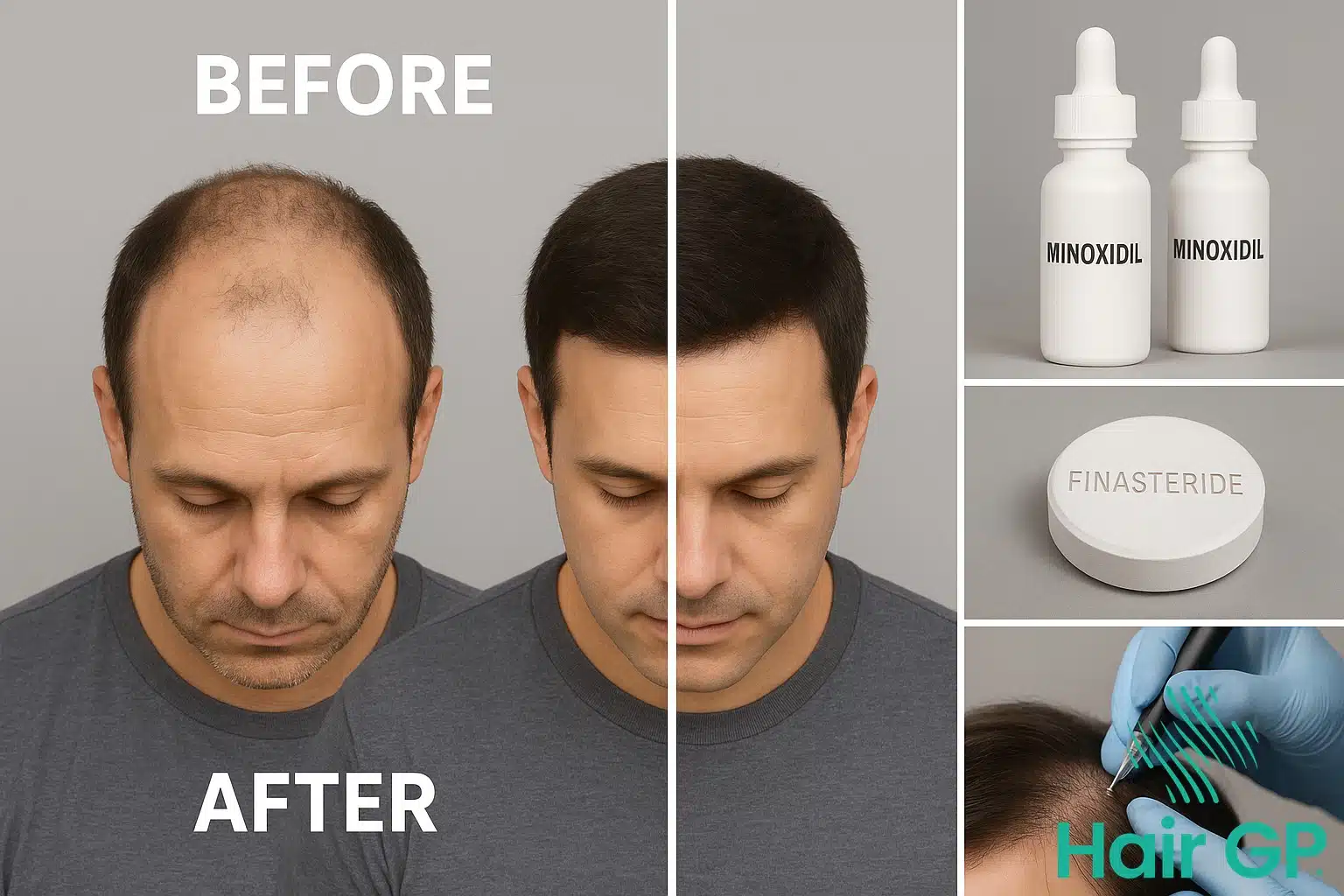
- Effective hair loss treatments include minoxidil, finasteride, and lifestyle changes
- Consult a healthcare professional for proper diagnosis and treatment of hair loss concerns
Understanding Hair Loss Basics
Understanding the fundamentals of hair loss requires knowledge of normal hair growth patterns and the various conditions that can disrupt this process. Hair follicles operate in predictable cycles, and distinguishing between normal shedding and pathological hair loss is essential for proper assessment and treatment.
Types of Hair Loss
Androgenetic alopecia represents the most common form of hair loss, affecting approximately 50% of men over age 50 and 40% of women by menopause [1]. Male pattern baldness typically presents with receding hairlines and crown thinning, whilst female pattern baldness manifests as diffuse thinning across the crown. Telogen effluvium causes temporary hair loss due to stress, illness, or hormonal changes, pushing hair follicles into the resting phase prematurely. Alopecia areata creates patchy hair loss through autoimmune mechanisms, affecting roughly 2% of the population.
Normal Hair Shedding vs Hair Loss
Normal hair growth occurs in three phases: anagen (growth), catagen (transition), and telogen (resting) [2]. Healthy individuals shed 50-100 hairs daily as part of natural follicle cycling. Concerning signs include sudden increases in shedding, visible scalp areas, or hair loss exceeding 150 strands daily. Understanding these distinctions helps differentiate temporary fluctuations from progressive alopecia requiring medical attention.

The Masturbation Hair Loss Myth Explained
The belief that masturbation causes hair loss represents one of history’s most enduring masturbation myths, with roots tracing back to Victorian-era moral panic and pseudoscientific theories. These unfounded claims emerged during the 18th and 19th centuries when medical authorities falsely attributed numerous health problems to self-pleasure, creating a legacy of fear that persists today.
People continue believing masturbation leads to hair loss because these myths exploit natural anxieties about both sexuality and physical appearance. The coincidence of increased masturbation during puberty—when hormonal changes can affect hair growth—creates false correlations in people’s minds. Additionally, myths about hairy palms and other supposed consequences have been perpetuated through cultural transmission, often as scare tactics.
Scientific evidence conclusively demonstrates that healthy masturbation practices have no connection to hair loss. Male pattern baldness results from genetic factors and dihydrotestosterone sensitivity, not sexual activity. Research shows that even excessive masturbation does not impact hair follicles or hormone levels sufficiently to cause baldness. Modern medicine has thoroughly debunked claims that links masturbation to hair loss, establishing that these concerns are entirely unfounded and based on outdated moral judgements rather than biological reality.
Scientific Research on Masturbation and Hair Loss
Scientific research examining masturbation’s physiological effects reveals no credible evidence linking the practice to hair loss. Comprehensive studies investigating hormonal changes following ejaculation demonstrate that masturbating increases testosterone levels temporarily, contradicting claims that it depletes this crucial hormone [3]. Research indicates that testosterone levels actually rise following periods of abstinence and then stabilise, with regular ejaculation maintaining healthy hormonal balance rather than causing deficiency.
Extensive clinical investigations into sexual behaviour and health outcomes show that masturbation correlates with positive physiological effects rather than detrimental ones. Studies examining men with low testosterone, sexual dysfunction, erectile dysfunction, and low libido find these conditions stem from medical factors, psychological stress, or lifestyle issues—not masturbation frequency [4]. Research consistently demonstrates that regular ejaculation through masturbation may actually support prostate health and sexual function. The scientific consensus firmly establishes that masturbation represents normal sexual behaviour with no adverse effects on hair follicles, hormone production, or overall health. These evidence-based findings definitively refute unfounded claims connecting masturbation to hair loss, providing reassurance to individuals concerned about this persistent myth.
Real Causes of Hair Loss in Men and Women
Hair loss affects millions of people worldwide, yet misconceptions about its causes persist. Understanding the scientifically-proven factors that genuinely contribute to hair thinning helps individuals focus on legitimate treatment approaches rather than pursuing ineffective remedies based on myths.
Genetic and Hormonal Factors
Androgenetic alopecia, commonly known as male pattern baldness and female pattern baldness, represents the most prevalent form of hair loss affecting both sexes. Genetic inheritance patterns play a crucial role, with studies showing that individuals with a family history of pattern baldness face significantly higher risks [5]. The condition primarily results from sensitivity to dihydrotestosterone (DHT), a hormone derived from testosterone that causes hair loss by shrinking hair follicles [6]. In women, hormonal fluctuations during menopause, pregnancy, and thyroid disorders can trigger or accelerate hair thinning, though the underlying genetic predisposition remains the primary factor.
Medical Conditions and Medications
Various health conditions directly causes hair loss through different mechanisms. Thyroid disorders, including both hyperthyroidism and hypothyroidism, frequently result in diffuse hair thinning across the scalp. Autoimmune conditions such as alopecia areata cause the immune system to attack hair follicles, leading to patchy hair loss. Additionally, numerous medications produce hair loss as a side effect, with chemotherapy drugs being the most well-known example. Other pharmaceutical causes include blood thinners, antidepressants, and certain blood pressure medications, highlighting the importance of medical consultation when experiencing unexplained hair loss.

Hormones, DHT, and Male Pattern Baldness
Male pattern baldness, scientifically known as androgenetic alopecia, results from the complex interaction between dihydrotestosterone (DHT) and genetically sensitive hair follicles on the scalp [7]. DHT forms when the enzyme 5-alpha reductase converts testosterone into this more potent androgen, creating a hormone approximately five times stronger than testosterone itself.
The mechanism begins when DHT binds to androgen receptors within hair follicles, particularly those along the hairline and crown areas of the scalp [6]. This binding triggers a cascade of molecular events that gradually shrink hair follicles through a process called miniaturisation. As follicles become smaller, they produce increasingly thin, short hairs before eventually ceasing hair production entirely, leading to visible balding patterns.
Individual hair follicles sensitivity to DHT varies significantly due to genetic factors, explaining why some men lose hair whilst others maintain full coverage despite similar hormone levels. The number and sensitivity of androgen receptors in scalp tissue determine how aggressively DHT affects each person’s follicles. Areas with higher receptor density, such as the temples and crown, typically show the earliest signs of hair loss. Understanding this biological mechanism helps explain why male pattern baldness follows predictable patterns and why targeted treatments focus on either reducing DHT production or blocking its effects on susceptible hair follicles.

Hair Loss Prevention and Treatment Options
Hair loss affects millions of people worldwide, but numerous proven treatments and prevention strategies can effectively address this concern. Understanding evidence-based approaches to prevent hair loss and treat existing thinning helps individuals make informed decisions about their hair health. Comprehensive treatment plans often combine FDA-approved medications with lifestyle modifications for optimal results.
FDA-Approved Medications
Minoxidil, commonly known as Regaine, remains the most widely used topical treatment to prevent hair loss and stimulate regrowth. Applied directly to the scalp twice daily (for men, once daily for women), minoxidil works by increasing blood flow to hair follicles and extending the growth phase of hair cycles. Clinical studies demonstrate that minoxidil produces noticeable hair regrowth in approximately 40-50% of users within 3-6 months [8].
Finasteride, an oral medication, blocks the conversion of testosterone to dihydrotestosterone (DHT), the primary hormone responsible for male pattern baldness. Research shows finasteride successfully slows hair loss in 83% of men and promotes regrowth in 65% of participants over two years [9]. Both hair treatments require continuous use to maintain benefits, with results typically becoming apparent after 3-4 months of consistent application.
Lifestyle and Natural Approaches
Supporting healthy hair growth requires adequate nutrition, particularly protein, iron, and B vitamins essential for follicle function. Stress management through regular exercise, meditation, and adequate sleep helps prevent stress-related hair loss. Gentle hair care practices, including avoiding harsh chemicals and excessive heat styling, protect existing hair from damage. While hair transplant procedures offer permanent solutions for advanced hair loss, combining medical treatments with healthy lifestyle choices provides the most comprehensive approach to maintaining hair health.
When to Consult a Healthcare Professional
If you’re experiencing hair loss that seems excessive or sudden, professional medical evaluation becomes essential. Signs that warrant consultation include losing more than 100 hairs daily, noticing bald patches, hair fall accompanied by scalp irritation or pain, and thinning that affects your confidence. Additionally, if lifestyle changes and over-the-counter treatments haven’t helped promote hair growth after several months, a healthcare professional can identify underlying causes and recommend targeted treatments to stimulate hair growth effectively.
Your GP serves as the ideal starting point for hair loss concerns, as they can rule out common medical causes and provide referrals if needed. Dermatologists specialise in scalp and hair conditions, whilst endocrinologists address hormonal factors affecting healthy hair growth. During consultation, expect a thorough medical history review, physical examination of your scalp, and potentially blood tests to check hormone levels, nutritional deficiencies, or autoimmune markers that impact healthy hair.
To maximise your appointment’s effectiveness, document your hair loss patterns, including when it started and any triggering factors. Bring a list of current medications, supplements, and hair care products you use. Consider taking photographs showing progression over time, and prepare questions about treatment options that could restore healthy hair growth and prevent further hair fall.
Conclusion
The persistent myth linking masturbation and hair loss lacks any scientific foundation, and this misconception continues to cause unnecessary anxiety among individuals concerned about their hair health. Extensive research has definitively established that masturbation does not contribute to hair loss, hormonal imbalances, or any adverse effects on healthy hair growth.
The genuine causes of hair loss include androgenetic alopecia, hormonal fluctuations, nutritional deficiencies, stress, and certain medical conditions. Factors such as elevated blood pressure, autoimmune disorders, and genetic predisposition play far more significant roles in hair loss than any sexual behaviour. Even body hair growth patterns remain unaffected by masturbation frequency.
To prevent hair loss and maintain optimal hair health, focus on evidence-based approaches including proper nutrition, stress management, appropriate hair care routines, and professional medical consultation when necessary. Treatments such as minoxidil, finasteride, and lifestyle modifications have proven effectiveness, unlike unfounded lifestyle restrictions.
Rather than believing in myths, prioritise scientific evidence when addressing hair concerns. Consult qualified healthcare professionals for personalised advice, embrace healthy lifestyle practices, and remember that normal sexual behaviour poses no threat to your hair. Making informed decisions based on medical research, not misconceptions, represents the most effective path to maintaining healthy hair growth throughout life.
Frequently Asked Questions
No, frequent masturbation does not cause hair thinning. This is a myth with no scientific basis. Hair thinning is primarily caused by genetics, hormones like DHT, medical conditions, or medications.
Masturbation has minimal temporary effects on testosterone levels that return to normal quickly. These minor fluctuations do not contribute to hair loss, which is mainly driven by genetic sensitivity to DHT.
Consult a dermatologist or healthcare professional for proper evaluation. Sudden hair loss can indicate underlying health conditions that require medical attention and appropriate treatment.
No sexual activities, including masturbation, cause hair loss. Hair loss is primarily genetic and hormonal, not related to sexual behavior or frequency of sexual activity.
References
- Hoover E, Alhajj M, Flores JL. Physiology, Hair. In: StatPearls. Treasure Island (FL): StatPearls Publishing; 2023. PMID: 29763123
- Phillips TG, Slomiany WP, Allison R. Hair Loss: Common Causes and Treatment. Am Fam Physician. 2017. PMID: 28925637
- Jiang M, Xin J, Zou Q, Shen JW. A research on the relationship between ejaculation and serum testosterone level in men. J Zhejiang Univ Sci. 2003. PMID: 12659241
- Leitzmann MF, Platz EA, Stampfer MJ, Willett WC, Giovannucci E. Ejaculation frequency and subsequent risk of prostate cancer. JAMA. 2004. PMID: 15069045
- Hagenaars SP, Hill WD, Harris SE, Ritchie SJ, Davies G, Liewald DC et al.. Genetic prediction of male pattern baldness. PLoS Genet. 2017. PMID: 28196072
- Adil A, Godwin M. The effectiveness of treatments for androgenetic alopecia: A systematic review and meta-analysis. J Am Acad Dermatol. 2017. PMID: 28396101
- Lolli F, Pallotti F, Rossi A, Fortuna MC, Caro G, Lenzi A et al.. Androgenetic alopecia: a review. Endocrine. 2017. PMID: 28349362
- Hu R, Xu F, Sheng Y, Qi S, Han Y, Miao Y et al.. Combined treatment with oral finasteride and topical minoxidil in male androgenetic alopecia: a randomized and comparative study in Chinese patients. Dermatol Ther. 2015. PMID: 26031764
- Varothai S, Bergfeld WF. Androgenetic alopecia: an evidence-based treatment update. Am J Clin Dermatol. 2014. PMID: 24848508