
Introduction
As the darker months approach, many people notice changes in their mood, energy levels, and surprisingly, their hair health. The connection between seasonal light exposure and hair growth is more significant than you might think, with research revealing how diminished sunlight during autumn and winter can impact our body’s natural hair growth cycles. For those experiencing seasonal affective disorder alongside thinning hair or increased shedding, seasonal light therapy for hair growth offers a scientifically-backed solution that addresses both concerns simultaneously.
Light therapy, particularly through the use of a SAD lamp, works by mimicking natural sunlight to regulate our circadian rhythms and support vital biological processes that influence hair health. When our bodies receive insufficient light during darker months, it can disrupt hormone production, reduce vitamin D synthesis, and increase stress levels – all factors that directly affect hair growth and retention. By incorporating targeted light exposure into your daily routine, you can help counteract these seasonal challenges whilst supporting healthier, stronger hair.
This comprehensive guide will explore the fascinating science connecting light exposure to hair follicle health, examining how different types of light therapy devices can benefit your hair. We’ll review the most effective SAD lamps currently available, providing detailed comparisons to help you choose the right option for your needs. Additionally, you’ll discover practical strategies for incorporating light therapy into your daily routine, ensuring you maximise both the mood-boosting and hair growth benefits throughout the challenging winter months.
Key Takeaways – TL/DR
- SAD lamps can indirectly support hair growth by regulating hormones and improving vitamin D synthesis during darker months
- Light therapy helps normalize circadian rhythms, reducing stress hormones that can trigger hair loss
- Best results come from consistent morning use of 10,000 lux SAD lamps for 20-30 minutes daily
- Combining light therapy with red light therapy may enhance hair follicle stimulation
- Results typically appear after 4-8 weeks of consistent light therapy use
Understanding Seasonal Light Therapy and Hair Health
The intricate relationship between light exposure, mood, and hair growth cycles becomes particularly evident during darker months when many experience both sad symptoms and changes in hair health. Understanding how seasonal affective disorder influences our hair through hormonal shifts, nutritional deficiencies, and stress responses provides crucial insight into why light therapy can effectively support healthy hair growth throughout winter.
What is SAD and How Does It Affect Hair Growth
Seasonal affective disorder affects approximately 5% of adults in the UK, with symptoms typically emerging as daylight hours diminish . This condition triggers a cascade of physiological changes that directly impact hair follicle health. When experiencing winter blues, the body releases elevated levels of stress hormones, particularly cortisol, which can trigger telogen effluvium—a condition where hair prematurely enters the resting phase, leading to increased shedding [1].
Beyond stress responses, seasonal affective disorder often coincides with vitamin D deficiency, as reduced sunlight exposure limits our body’s natural production. This deficiency significantly impacts hair follicle cycling, as vitamin D receptors play a crucial role in maintaining healthy hair growth phases. Research indicates that individuals with SAD frequently exhibit lower vitamin D levels, which can disrupt normal follicular function and contribute to hair thinning.
The Role of Circadian Rhythms in Hair Health
During darker months, disrupted circadian rhythms profoundly affect hair growth cycles. Altered melatonin production, triggered by reduced light exposure, influences not only sleep patterns but also hair follicle activity. Cortisol rhythm disruption, common in those experiencing sad symptoms, creates an environment where hair follicle stem cells struggle to maintain normal regenerative cycles. This circadian misalignment affects the precise timing required for healthy hair growth phases, potentially accelerating hair loss during winter months.

The Science Behind Light Therapy for Hair Growth
Light therapy harnesses specific wavelengths to stimulate biological processes that support healthy hair growth through multiple mechanisms. Understanding how light exposure affects our hair follicles at the cellular level reveals why seasonal changes in sunlight can significantly impact hair health, and how therapeutic light intervention can restore optimal growth patterns.
Vitamin D Synthesis and Hair Follicle Function
Bright light exposure stimulates vitamin D production in the skin, which plays a crucial role in hair follicle cycling. Research demonstrates that vitamin D receptors are present throughout hair follicles, where they regulate the transition between growth and resting phases [2]. Optimal vitamin D levels, typically achieved through adequate light exposure of 10,000 lux for 30 minutes daily, support the proliferation of dermal papilla cells essential for hair growth. When vitamin D levels drop below 30 ng/ml, as commonly occurs during winter months with reduced light exposure, hair follicles may prematurely enter the telogen phase, leading to increased shedding.
Hormonal Balance and Stress Reduction
Light therapy significantly influences hormonal balance by regulating circadian rhythms and reducing cortisol levels. Morning bright light exposure helps normalise melatonin production, ensuring proper sleep-wake cycles that support healthy hair growth [3]. Additionally, consistent light therapy reduces chronic stress-induced cortisol elevation, which can disrupt hair follicle function and accelerate hair loss. The therapy also supports optimal thyroid hormone production, with studies showing improved T3 and T4 levels following regular light exposure, directly benefiting hair growth cycles.
Mitochondrial Stimulation and Cellular Energy
At the cellular level, specific wavelengths of light penetrate the scalp to stimulate mitochondrial activity within hair follicles. This photobiomodulation increases ATP production by up to 70%, providing essential energy for rapidly dividing follicle cells. Enhanced mitochondrial function improves follicle metabolism, allowing for more efficient protein synthesis and keratin production. The increased cellular energy also enhances nutrient delivery through improved microcirculation, while higher serotonin levels from light therapy support the complex signalling pathways that maintain healthy hair growth cycles throughout seasonal transitions.

Types of Light Therapy for Hair Growth Support
Various types of light therapy offer distinct mechanisms and benefits for supporting healthy hair growth, from traditional SAD lamps that boost mood and regulate hormones to targeted red light therapy devices that stimulate cellular activity in hair follicles. Understanding these different approaches enables individuals to select the most appropriate light therapy lamps for their specific hair health needs whilst addressing seasonal mood changes.
SAD Lamps vs Red Light Therapy
Traditional SAD lamps emit bright white light at 10,000 lux intensity, primarily supporting hair health through mood enhancement and hormonal regulation that indirectly benefits hair growth cycles. These light box devices help normalise cortisol levels and support vitamin D synthesis, creating favourable conditions for healthy hair growth. In contrast, red light therapy utilises specific wavelengths between 660-850nm that penetrate the scalp directly, stimulating mitochondrial activity within hair follicles and potentially encouraging cellular regeneration.
Combination therapy approaches increasingly incorporate both white light for mood support and red wavelengths for direct follicle stimulation, offering comprehensive benefits. Some advanced devices alternate between these modalities or allow users to customise their light exposure based on individual needs, maximising both psychological and physiological support for hair health.
Blue Light and UV Considerations
Whilst blue light wavelengths promote alertness and help regulate circadian rhythms, timing becomes crucial when using these frequencies. Morning exposure to blue-enriched light supports natural wake cycles and hormone production beneficial for hair growth, whilst evening exposure may disrupt sleep patterns that affect hair health. Most quality light therapy devices filter out harmful UV light, ensuring safe daily use without skin damage concerns. When selecting devices, prioritising UV-free options protects both scalp health and overall wellbeing whilst delivering therapeutic light benefits.

Best SAD Lamps for Hair Growth and Wellness
Selecting the right light therapy lamp can make a significant difference in supporting both mood and hair health during darker months. Understanding key features and specifications helps ensure you choose a device that delivers therapeutic light intensity whilst fitting seamlessly into your daily routine.
Top Features to Look for in SAD Lamps
When searching for the best sad lamp, prioritise models offering 10,000 lux brightness at a comfortable viewing distance. This light intensity mimics natural daylight effectively, triggering beneficial biological responses without overwhelming the eyes. Look for UV-free full spectrum bulbs that provide clean, white light similar to a bright morning sky. Adjustable angles allow you to position the lamp optimally whilst working or relaxing, whilst built-in timers ensure consistent daily exposure. The most effective models feature diffusion screens that distribute light evenly, reducing glare and eye strain during extended use.
Recommended SAD Lamp Models
The Lumie Vitamin L stands out amongst sad light options, offering medical-grade 10,000 lux output in a sleek, portable design. Its adjustable stand and compact footprint make it ideal for desk use, whilst the flicker-free technology ensures comfortable viewing. Other trusted brands include Beurer and Philips, with prices typically ranging from £60 to £200 depending on features and size. Consider warranty length when comparing models—reputable manufacturers offer at least two years coverage. The durability of LED bulbs in modern units means they’ll provide years of reliable service with minimal maintenance required.
Sunrise Alarm Clocks as Complementary Tools
Sunrise simulation devices work brilliantly alongside traditional light therapy lamp use, gently preparing your body for the day ahead. These clever devices gradually increase light levels over 30-60 minutes before your wake time, supporting natural cortisol production and circadian rhythm regulation. By mimicking dawn’s natural progression, they help improve sleep quality and morning energy levels. Many users report feeling more refreshed and experiencing better hormonal balance when combining sunrise simulation with dedicated light therapy sessions, creating a comprehensive approach to managing seasonal wellness challenges.
How to Use Light Therapy Effectively for Hair Health
Implementing light therapy effectively for hair health requires understanding how SAD lamps work alongside establishing consistent usage patterns. By following structured guidelines for timing, duration, and integration with existing hair care routines, individuals can maximise the benefits of natural light exposure whilst simultaneously supporting healthy hair growth.
Optimal Timing and Duration
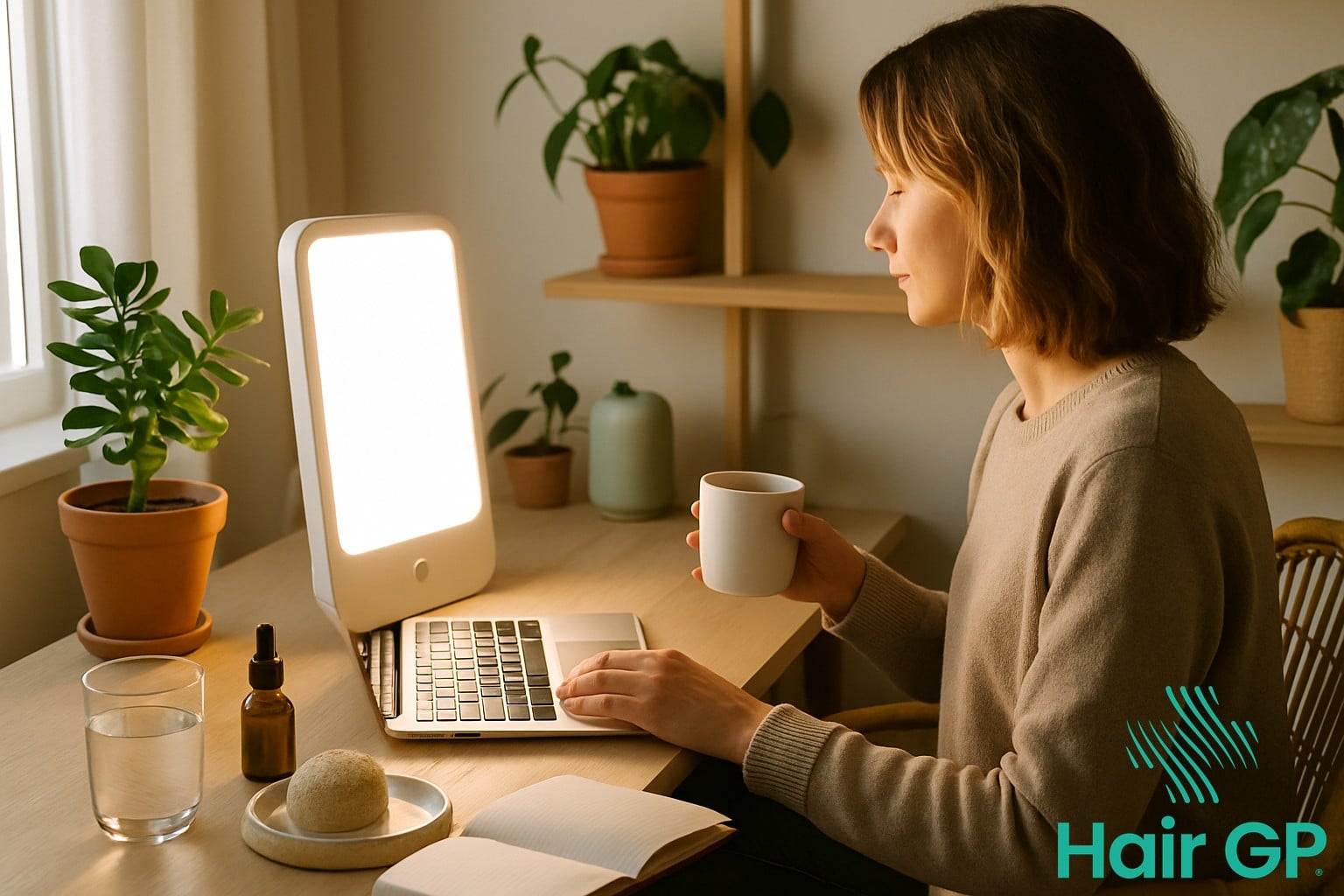
Morning sessions prove most effective when treating SAD symptoms that can impact hair health through hormonal disruption. Research indicates that 20-30 minute sessions between 6am and 8am help regulate circadian rhythms, supporting the natural hormone cycles essential for hair growth. Consistency remains crucial – daily use delivers better results than sporadic sessions, as regular sunlight exposure mimicry helps maintain stable cortisol levels that protect against stress-induced hair loss. Position your light therapy device 16-24 inches from your face whilst reading, working, or enjoying breakfast to seamlessly incorporate treatment into morning routines.
Combining Light Therapy with Other Hair Care
Integrating light therapies with comprehensive hair care amplifies overall results. Pair morning light sessions with nutrient-rich breakfasts containing biotin, iron, and omega-3 fatty acids to support follicle health from within. Gentle scalp massage during or after light therapy sessions enhances blood circulation, whilst stress-reduction practices like meditation complement efforts to treat SAD symptoms affecting hair growth. This holistic approach addresses multiple factors contributing to hair health, creating synergistic benefits that exceed those achieved through light therapy alone.
Conclusion
Seasonal light therapy for hair growth offers a powerful dual approach to wellness during darker months. Consistent use of quality SAD lamps during dark days provides essential light exposure that supports both mood and hair growth simultaneously. The sad lamp benefits extend beyond psychological wellbeing, promoting vitamin D synthesis and optimising hormonal balance crucial for healthy follicle function. By incorporating therapeutic light sessions into daily routines, particularly during autumn and winter, individuals can maintain robust hair growth cycles whilst supporting overall wellness. This evidence-based approach represents a natural, non-invasive solution for those experiencing seasonal hair thinning.
Frequently Asked Questions
Most people begin noticing improvements in hair health after 4-8 weeks of consistent daily use. Initial benefits include reduced hair shedding and improved scalp condition, while new growth typically becomes visible after 2-3 months of regular light therapy combined with proper nutrition.
Yes, SAD lamps can benefit anyone experiencing reduced light exposure, regardless of whether they have diagnosed SAD. The light therapy supports vitamin D production, circadian rhythm regulation, and overall wellness, which can positively impact hair health even in those without depression.
SAD lamps emit bright white light (10,000 lux) that mimics natural sunlight to regulate circadian rhythms and mood, indirectly supporting hair health. Red light therapy uses specific wavelengths (660-850nm) that penetrate the scalp directly to stimulate hair follicles. Many people use both for optimal results.
Light therapy is generally safe, but some people may experience mild headaches, eye strain, or temporary sleep disruption when first starting. Those with bipolar affective disorder should consult a healthcare provider before use. Always follow manufacturer guidelines and avoid staring directly at the light.
References
- Trüeb RM. The impact of oxidative stress on hair. Int J Cosmet Sci. 2015;37 Suppl 2:25-30. PMID: 26574302
- Gerkowicz A, Chyl-Surdacka K, Krasowska D, Chodorowska G. The Role of Vitamin D in Non-Scarring Alopecia. Int J Mol Sci. 2017. PMID: 29215595
- Kobayashi H, Kromminga A, Dunlop TW, Tychsen B, Conrad F, Suzuki N et al.. A role of melatonin in neuroectodermal-mesodermal interactions: the hair follicle synthesizes melatonin and expresses functional melatonin receptors. FASEB J. 2005. PMID: 16030176